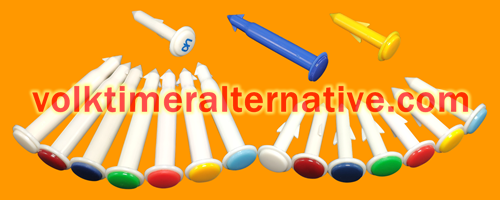
What Procurement Teams Should Evaluate Before Switching to a New Disposable Pop-Up Timer Supplier
What Procurement Teams Should Evaluate Before Switching to a New Disposable Pop-Up Timer Supplier
Changing suppliers is rarely a decision made overnight. In food manufacturing, every production component—regardless of its size—must pass technical validation, quality assurance, purchasing approval, and often customer acceptance before becoming part of a commercial production line.
Disposable pop-up timers are no exception. Although they represent only a small percentage of total product cost, their performance directly influences cooking accuracy, product consistency, consumer confidence, and production efficiency.
For procurement professionals considering an alternative supplier, the objective should never be finding the lowest quotation alone. The real goal is identifying a manufacturing partner capable of delivering consistent quality, dependable supply, regulatory compliance, and long-term operational value.
Supplier Replacement Is About Risk Management
Experienced procurement managers understand that supplier transitions are fundamentally risk management projects rather than purchasing exercises.
Before approving a new source, decision-makers typically ask several practical questions:
- Will product performance remain consistent?
- Can the supplier support long-term production capacity?
- Does the factory understand international food-contact regulations?
- Will quality remain stable across every shipment?
- Can technical issues be resolved quickly?
- Does the supplier have experience with export markets?
Only after these questions are answered does price become a meaningful comparison factor.
Start With Manufacturing Experience
Not every plastic injection factory is equipped to manufacture disposable cooking timers at industrial standards.
Although the product appears simple, consistent activation depends on precise interaction between multiple engineered components, including the housing, internal pin, food-grade wax formulation, precision spring, and molding tolerances.
Factories dedicated to this product category typically develop specialized production knowledge over many years, resulting in:
- Improved dimensional consistency
- Lower batch variation
- More stable activation temperatures
- Reduced production defects
- Better process documentation
Long-term specialization often provides advantages that general plastic manufacturers cannot easily duplicate.
Evaluate Material Selection Instead of Appearance
Two disposable pop-up timers may appear nearly identical from the outside while performing very differently during production.
Procurement teams should therefore focus on internal material specifications rather than visual appearance alone.
Important questions include:
- Is the housing manufactured from food-grade PA66?
- Are all materials BPA-free?
- Does the temperature-sensitive wax contain heavy metals?
- Is a precision metal spring used?
- Can the supplier provide material traceability?
Reliable suppliers should answer these questions clearly and provide supporting documentation whenever required.
Validate Temperature Consistency
The most critical technical requirement of a disposable pop-up timer is repeatable activation.
A supplier should be capable of demonstrating stable temperature performance throughout mass production rather than relying solely on prototype samples.
Many professional buyers request production validation covering:
- Activation temperature accuracy
- Batch-to-batch consistency
- Repeatability testing
- Production sampling records
- Quality inspection procedures
An activation accuracy around ±2°F is generally regarded as a strong indicator of stable manufacturing control for commercial food applications.
Assess Quality Management Beyond Certifications
Certifications remain important, but they represent only one part of supplier qualification.
Procurement teams should also understand how quality is maintained during daily production.
Useful evaluation topics include:
- Incoming raw material inspection
- Process control checkpoints
- Finished product inspection
- Lot identification
- Traceability systems
- Corrective action procedures
Well-documented quality systems often reveal more about a supplier than a certificate displayed on a website.
Review Regulatory Documentation Early
International food manufacturers frequently supply products to multiple countries simultaneously.
As a result, procurement departments should confirm regulatory documentation before commercial production begins.
Common documentation requests include:
- FDA compliance information
- EU food-contact declarations
- BRC-related manufacturing documentation
- Material specifications
- Product test reports
Receiving these documents early reduces delays during supplier onboarding and customer audits.
Consider Production Capacity, Not Only Current Demand
Many sourcing decisions are made based on today's purchasing volume.
However, successful partnerships often last for years, during which production requirements may increase substantially.
Questions worth discussing include:
- Can production expand during seasonal demand?
- How are urgent orders handled?
- What are the standard lead times?
- Is additional manufacturing capacity available?
- How is production scheduling managed?
Capacity planning becomes particularly important for turkey and poultry processors during peak seasonal production.
Communication Is an Overlooked Procurement Advantage
Technical capability alone does not guarantee a successful supplier relationship.
Communication efficiency often determines how quickly production issues can be resolved.
Factory-direct manufacturers usually provide several practical advantages:
- Direct engineering discussions
- Faster technical feedback
- Quicker design revisions
- Reduced communication layers
- Shorter project timelines
For customized products, direct communication frequently saves both time and development costs.
Evaluate Total Cost Instead of Unit Price
The quoted price per timer is only one part of the purchasing equation.
Procurement professionals increasingly calculate the total cost of ownership, which includes factors such as:
- Product consistency
- Production downtime
- Customer complaints
- Replacement costs
- Inventory management
- Engineering support
- Lead time reliability
- Administrative efficiency
In many cases, a slightly lower purchase price becomes insignificant if inconsistent quality creates operational disruptions elsewhere in the supply chain.
Building a Long-Term Manufacturing Partnership
The strongest supplier relationships extend beyond routine purchase orders.
When manufacturers and customers collaborate closely, opportunities often emerge to improve production efficiency, optimize product design, reduce waste, simplify packaging, and support future product development.
This collaborative approach creates value for both organizations while reducing procurement risk over time.
Conclusion
Selecting a new disposable pop-up timer supplier should be approached as a strategic procurement decision rather than a short-term purchasing exercise.
Manufacturing expertise, material quality, engineering consistency, regulatory support, production capacity, and responsive communication all contribute to the long-term success of a supplier relationship.
Organizations that evaluate suppliers using comprehensive operational criteria—not simply quoted pricing—are generally better positioned to build resilient supply chains capable of supporting future growth.